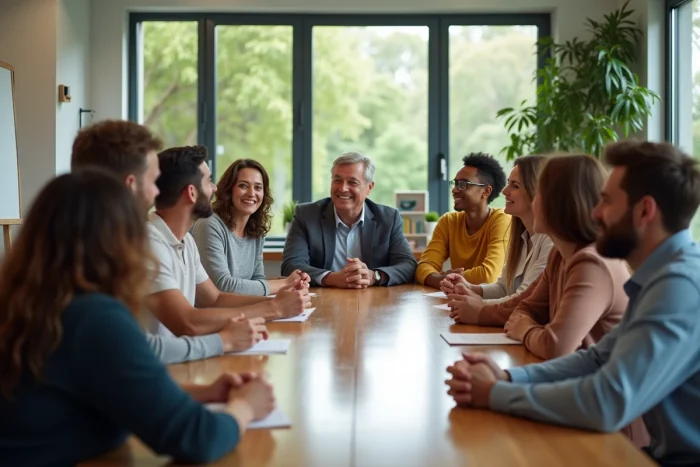
Horizontal governance does not automatically guarantee the sustainable involvement of participants. Collective initiatives often stumble over unclear roles or the weariness of wills. Some collectives thrive despite a lack of designated leadership, while others crumble even when all share common values.
Proven methods exist to structure and animate these dynamics, based on active listening, conflict management, and collaborative tools. Various resources facilitate the emergence of projects, shared decision-making, and openness to new members, which are essential to the vitality of common spaces.
Why do open collective spaces transform the dynamics of territories?
Third places disrupt the logic of traditional spaces. At the intersection of territorial revitalization and social innovation, these projects give form to a collective dynamic that has been difficult to grasp until now. Here, the boundary fades between project leaders, territorial actors, and future users. Everyone becomes a source of proposals, weaving connections that nourish the local economy.
The impact of a third place is not limited to the creation of a physical space. It shapes new uses, stimulates participatory approaches, and creates unexpected synergies. Within these communities, objectives evolve. We no longer simply talk about pooling resources, but about building a common project capable of adapting to the needs of the territory.
Field feedback confirms: the presence of a third place energizes activity, attracts new projects, and fosters the emergence of hybrid initiatives combining associations, independents, and local authorities. These spaces allow for building strong connections between generations, professional backgrounds, and cultures. The site rockette-libre.org regularly offers analyses on these developments, highlighting the challenges of revitalization and local innovation.
For project leaders, the animation of an open collective space relies on a deep understanding of the territorial fabric. Joining the dynamic of third places thus contributes to the profound transformation of territories, far beyond the simple management of a shared space.
Understanding the concept of third place: definitions, challenges, and concrete benefits
The third place asserts itself as a hybrid structure, between workspace, citizen laboratory, and collective living space. Neither a classic office nor a simple associative café, it combines innovation, training, and hospitality. Each third place project is born from a shared will: to offer the public an accessible place, open to the diversity of uses and initiatives.
Defining an appropriate model requires articulating shared governance, choosing the legal status, and clearly identifying the place. The legal structure influences sustainability, access to funding, and the ability to mobilize partners. Some teams prefer the association for its flexibility, while others opt for a cooperative or commercial company depending on the project’s ambition and the territorial configuration.
Main benefits of rigorous implementation
A project based on solid foundations deploys tangible effects on its community and environment:
- Increased synergies between local actors and newcomers.
- Deployment of mixed economic models, combining contributions from users, public subsidies, and commercial activities.
- Strengthening of shared governance and the autonomy of participants.
The success of a third place project relies on the ability to unite, adapt the implementation to the realities on the ground, and foster a strong identity. The challenge: to sustainably establish an identified place, readable, carrying a collective dynamic and a unique offering within the local fabric.
Essential resources and methods for effectively animating a collective
Uniting and sustaining a community in an open collective space requires mastering collaborative methods and maintaining constant attention to group dynamics. Project leaders for third places now have a wealth of concrete resources at their fingertips: guides, training, workshops dedicated to participatory animation. However, nothing replaces practical application, the continuous adjustment of tools according to the realities of the place and the expectations of users.
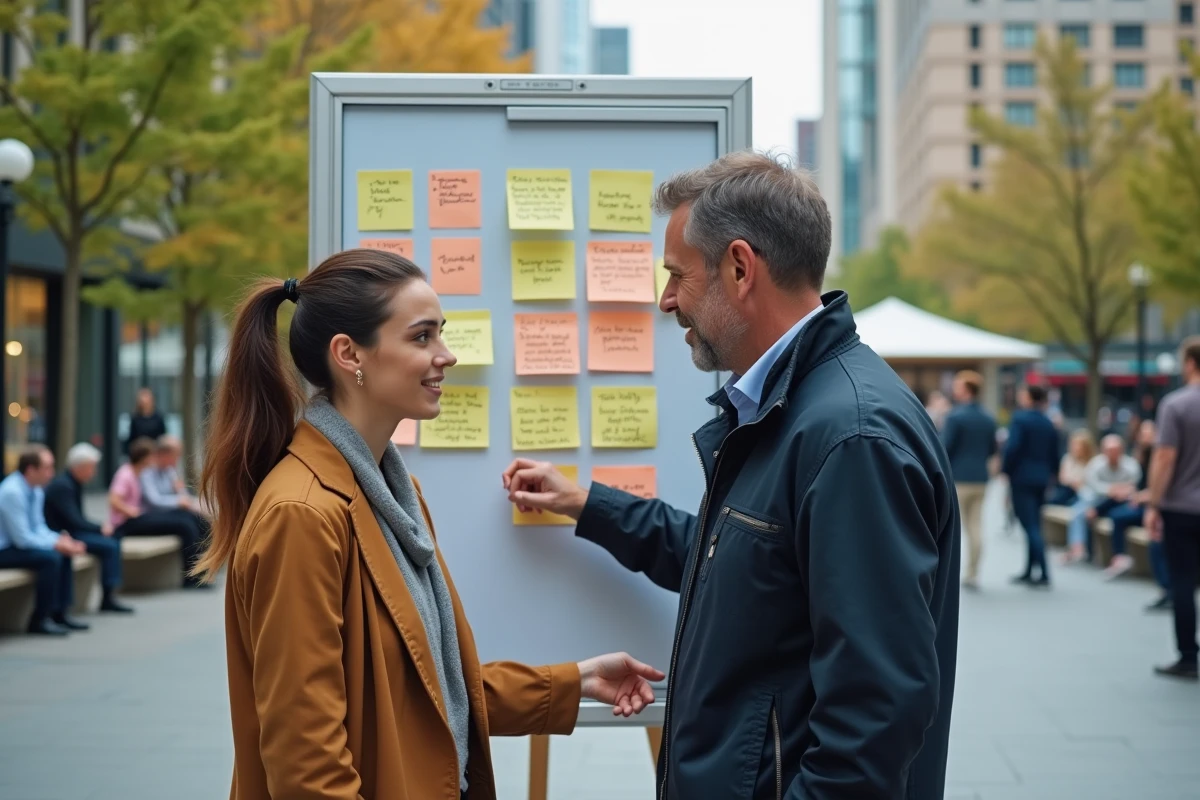
Shared governance is invented over time: regular exchanges, open meetings, use of graphic facilitation or collective mapping. These mechanisms encourage everyone’s involvement and create a climate conducive to the emergence of new ideas. Those who engage in the animation of a community know how much the diversity of profiles nourishes reflection and stimulates the vitality of the third place.
Here are some concrete levers to establish a sustainable collective dynamic:
- Install digital tools: collaborative management platforms, internal forums, shared calendars.
- Encourage the informal: shared meals, creative workshops, convivial spaces to stimulate meeting and exchange.
- Define clear and shared objectives: everyone understands their place and contributes actively.
The implementation of co-constructed activities acts as a driver to anchor the collective, maintain energy over time, and strengthen the identity of the place. Learning to animate a community also means accepting to navigate uncertainty, to open up to the unexpected, and to witness the growth, through experiences, of a collective intelligence capable of surprising even its own initiators.
An open collective space is not just a shared roof or a multipurpose room. It is a promise that takes shape, a dynamic that is built every day, and sometimes, a tipping point where the energy of a group shifts the lines of an entire territory.