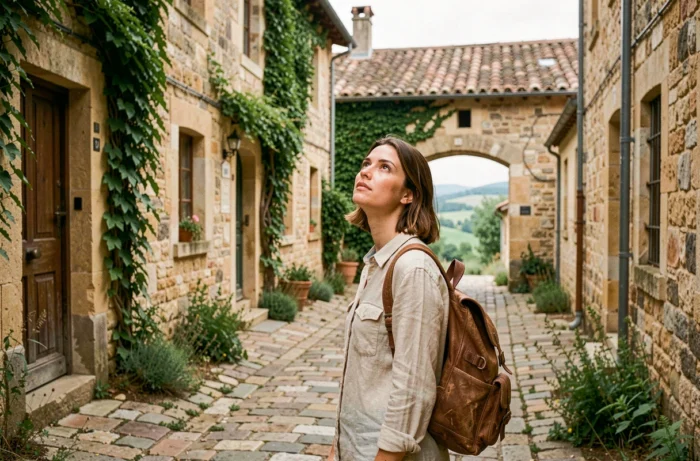
A getaway in France described as “off the beaten track” should take place in an area with low tourist numbers, be accessible by public transport, and have enough capacity to welcome visitors without being overwhelmed by a sudden influx. This three-part test is rarely met by the lists of “secret” destinations circulating online, and it changes how you plan a short break.
Car-free access: the real test for an under-the-radar destination
Many guides describe a remote village or a high-altitude lake as easy to reach because there’s a TGV station less than an hour away. The problem rarely lies with the main journey. It’s the last mile that determines whether the trip is feasible: a seasonal shuttle, a bus route with limited service, or no public transport at all between the station and the trailhead.
To plan getaways in France that are genuinely doable without a car, check not the map of train stations but the map of regional bus routes and local shuttles. An area served by a daily, year-round route offers a level of reliability that a summer shuttle, discontinued as soon as September arrives, cannot match.
Here are a few practical ways to check whether a place is fully accessible:
- Look up the timetable for the final leg (bus, shuttle, boat) on the regional council or intermunicipal authority’s website, not on a general-purpose aggregator.
- Check whether services run on Sundays and public holidays, when most local shuttles are suspended.
- Find accommodation within walking distance of the final stop, so you don’t have to rely on an additional transfer.
Overtourism and visitor management: why the rules vary from one site to another
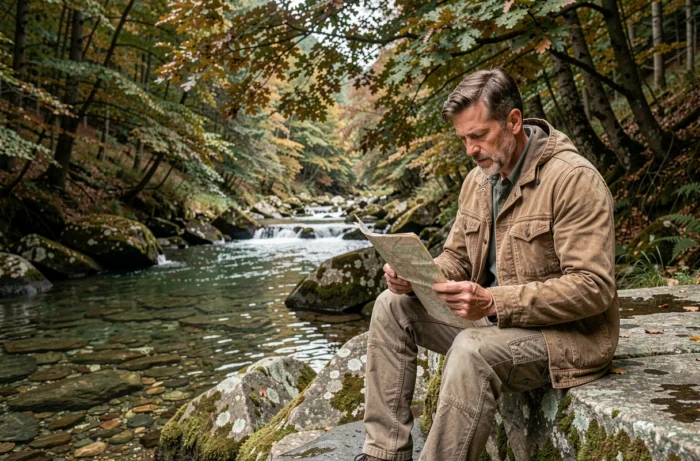
Promoting a “secret” spot without taking precautions often shifts tourist pressure elsewhere rather than reducing it. The phenomenon is now being measured. In the Écrins massif, camera traps installed along trails count visitors and track changes in footfall throughout the seasons. Monitoring systems for wild camping and swimming in high-altitude lakes are also being tested there.
Chamonix shows what the next step looks like. According to Le Monde on 6 November 2026, the town planned to introduce mandatory reservations and visitor caps for Lac Blanc and the Chéserys lakes from summer 2027, following intense tourist pressure. Swimming there was banned in 2023, and wild camping has required prior registration since 2024.
Check local guidance before you set off
These regulations are not applied uniformly. One regional nature park may allow wild camping while another prohibits it. Each site sets its own rules according to the season and the pressure it faces. Before choosing a destination, checking the website of the relevant park or nature reserve is the only reliable approach.
The issue goes beyond regulation alone. When a popular site introduces a visitor quota, people may simply move on to a nearby area that is less prepared to receive them. The measures announced in Chamonix included monitoring specifically to check for this displacement effect.
Choose a nature getaway in France without putting the area under strain
Finding a quiet spot isn’t enough. Before booking, ask yourself two questions: does the area have enough visitor facilities, and does your chosen time of year fall within a season when visitor pressure remains manageable?
Accommodation rooted in the local community (a village-run gîte, a bed and breakfast hosted by a local resident, or a staffed mountain refuge) ensures that the economic benefits go directly to the area. Holiday rental platforms, by contrast, can accelerate the transformation of a hamlet into a tourist dormitory.
How the season affects the experience and visitor capacity
The season radically changes a place’s atmosphere, but also its capacity to absorb visitors. A coastal trail in Brittany that’s open year-round receives only a fraction of its summer footfall in November. The experience is more peaceful, and the natural environment isn’t pushed beyond its limits.
Winter offers a similar opportunity in the mid-mountains. Villages in the Jura or Vosges, accessible by train and then bus, offer snowshoeing and cross-country skiing routes without the crowds of the major Alpine resorts. Visiting in the low season is the easiest way to discover a place without contributing to overtourism.
Practical criteria for finding an off-the-beaten-track destination
Rather than relying on a list of places (which would become outdated as soon as they gained popularity), use a set of criteria to find destinations that suit you.
- Complete public transport connections, including the final leg, verified on the regional transport operator’s website rather than an itinerary search engine.
- Small-scale accommodation (a mountain refuge, hikers’ hostel, or municipal campsite) rather than a hotel complex or a cluster of holiday rentals.
- Visitor guidance published by the site’s managing authority (nature park, reserve, or municipality), indicating that the area anticipates and manages visitor numbers.
- A visit timed outside peak season, identified using visitor-count data where it is publicly available.
These four criteria rule out most of the “Instagrammable” destinations featured in the usual recommendations. They point instead to areas where visitor facilities are sized to accommodate actual visitor numbers, not a viral surge.
Looking for a place no one knows about yet creates exactly the problem it claims to avoid. Checking real-world accessibility, the area’s capacity, and the rules in force is the only way to make sure a getaway benefits both the traveller and the place welcoming them.