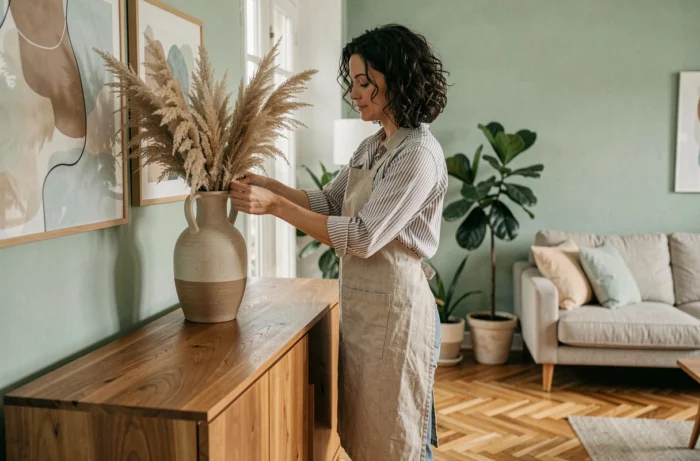
A wall that clashes with the sofa, a light fixture too small for the room, objects piled up without logic: we have all experienced that moment when the interior no longer resembles anything coherent. Transforming your decor with style and originality doesn’t come from checking off a trend catalog, but from concrete choices tailored to each room and each use. Here are the decor ideas that truly change the atmosphere of a living space.
Air Quality and Decor: Choices That Influence Health
Before discussing colors or furniture, we often overlook a technical point that conditions everything else. Paints, varnishes, and coatings emit volatile organic compounds into indoor air. A decor choice is also a health choice.
The NF Habitat reference framework, version 5, which came into effect on January 1, 2025, includes requirements related to the labeling of emissions from indoor products and air quality. When selecting wall paint or flooring, checking the emissions label (class A+) helps avoid degrading the air we breathe at home.
This criterion also guides furniture selection. A piece of solid raw or oiled wood emits less than a factory-finished particle board panel. You can find pieces on deco-factory.fr that allow you to combine aesthetics and healthier materials without sacrificing style.
Second-Hand Furniture: Creating an Original Interior Without Buying Everything New
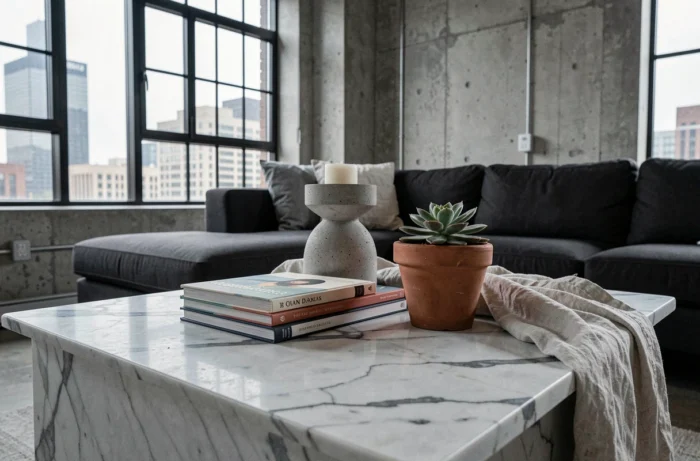
Second-hand is no longer a compromise; it’s a real lever of uniqueness. A 1960s sideboard paired with a contemporary table creates a visual tension that no catalog can replicate. The result: a piece that tells a story.
The sector has become structured. The extended producer responsibility specifications for furniture elements, covering the period 2024-2029, strengthen the objectives of repair, reuse, and recycling. Resource recovery centers and refurbishment circuits now offer a sufficiently wide range to furnish a complete interior.
To make the mix work, a simple rule applies:
- Keep a tight color palette (two to three dominant tones) to unify furniture from different eras
- Choose a recurring material (wood, black metal, rattan) present in at least two pieces of the living room
- Limit decorative objects to three per visible surface (shelf, console, coffee table) to avoid a flea market effect
This framework allows for integrating finds without the whole looking like an inventory.
Accent Walls and Colors: Transforming a Room Without Major Renovations
Repainting just one wall remains the decor gesture with the best effort-to-result ratio. An accent wall works as long as you choose the right one. Aim for the wall facing the entrance of the room or the one that supports a structural element (the headboard, the TV unit, the bookshelf).
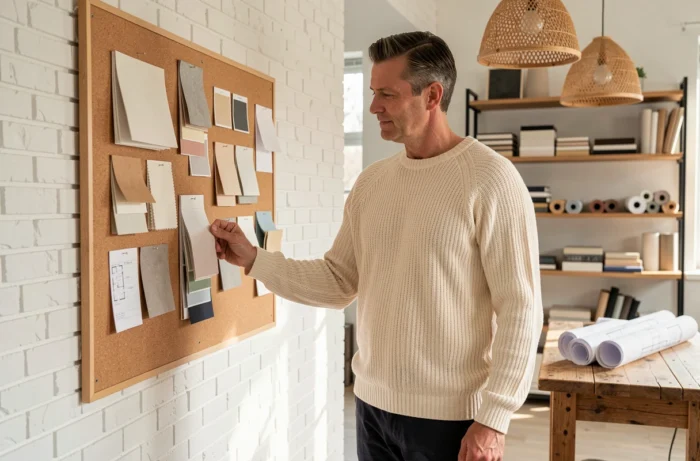
A deep tone on the back wall visually enlarges the depth of a narrow room. Conversely, a warm color (terracotta, ochre) on a side wall tightens an overly vast space and gives it character.
A common mistake is to accumulate too many shades. Three colors maximum in the same room are sufficient: a neutral dominant on the large volumes, an accent color on the chosen wall, and a third touch on textiles or objects. This rule applies to both the living room and the bathroom.
The finish matters as much as the hue. A matte finish absorbs light and masks imperfections, while a satin finish reflects more and is suitable for dark rooms. The visual result of the same color changes radically depending on the chosen finish.
Lighting and Textiles: Elements That Change the Atmosphere Without Moving a Piece of Furniture
We often underestimate a light fixture’s ability to redefine a space. A single central ceiling light casts flat, featureless light. Multiplying light sources at different heights transforms the ambiance of a room in just a few hours.
In practice, we combine three types of lighting:
- A general diffuse lighting (pendant or ceiling light) for basic brightness
- Accent lamps (floor lamp, table lamp) to create reading or conversation zones
- Accent lighting (adjustable spots, string lights, candles) to highlight an object or a wall
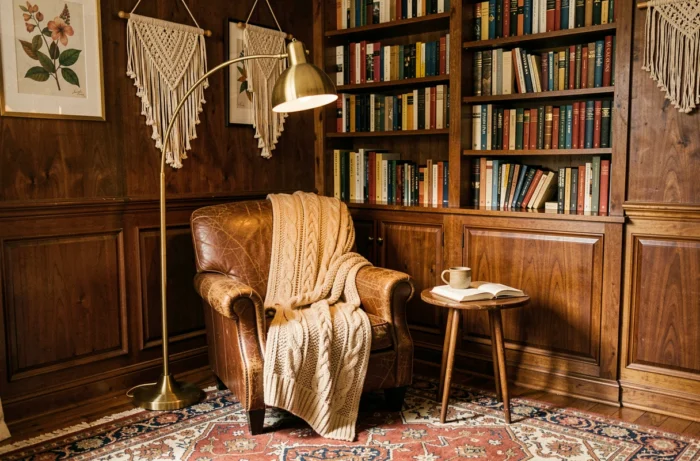
Textiles play a comparable role. Changing the cushions, throw, and curtains in a living room alters its palette without touching the walls or furniture. This way, you can adapt the ambiance to the season: natural linen and light colors in summer, velvet and deep shades in winter.
A curtain that touches the floor visually elongates the ceiling height. Hung just above the window, it compresses the room. This installation detail matters more than the choice of fabric itself.
Reversibility of Arrangements: Decorating with Future Changes in Mind
A well-thought-out interior transforms easily. Favoring reversible arrangements avoids throwing everything away at the next change. A partition screwed rather than glued, a floating floor installation, a dismountable piece of furniture: these technical choices may seem trivial, but they determine how easily the space can be modified in two or five years.
This principle also applies to small elements. Frames hung with a rail system allow for reorganizing a gallery wall without drilling again. Modular shelves adapt to a move or a change of room.
An original interior is built in successive layers, not all at once. Start with the large volumes (walls, floor, main furniture), then gradually adjust with textiles, lighting, and objects. This approach avoids costly mistakes and allows the decor to evolve with the tastes and needs of those who live there.