
In Sub-Saharan Africa, more than 60% of the adult population does not have access to a traditional bank account, according to the World Bank. Yet, the region holds the highest mobile money adoption rate in the world, with over 760 million registered accounts in 2023.
Local fintechs are not waiting for banks to redistribute the cards. They are inventing payment solutions capable of breaking free from the burdens of traditional circuits. This movement, driven by economic logics and rules tailored for the continent, is gradually transforming financial habits on a large scale.
Fintechs and mobile money: how Africa is reinventing payments
The landscape is changing rapidly on the payment front in Africa. Where traditional banking services struggled to establish themselves, African fintechs are seizing mobile money and making it a lever for transforming daily life. Mobile payment is emerging, not as a passing trend, but as a direct response to financial exclusion. The rise of mobile money platforms is shaking up the norms, moving the informal economy, and facilitating money transfers between cities and rural areas.
In the street or at the market, the mobile phone has become the primary local service point. It is impossible to ignore the ease of use, the speed of transactions, and the presence of networks everywhere, even where banks have never set foot. Opening an account, sending or receiving money: everything happens via a clear application, without technical barriers, without appointments at a branch. Mobile network operators are fully involved, deploying tailored solutions for an ultra-connected and mobile youth.
The figures confirm this shift: 760 million mobile money accounts registered in 2023, according to the World Bank. Nigeria, Kenya, and other key hubs are seeing new uses flourish. This massive reliance on digital signifies a profound transformation of the African economic fabric. To delve deeper into the topic, learning more about Voiloo helps to better understand the dynamics of the African financial services ecosystem, through detailed analyses of the growth and challenges of a booming market.
What challenges for financial inclusion and transaction security?
Widening access to financial services does not erase all obstacles. Disparities remain stark, especially in rural areas where access to digital technology and information is still uneven. A phone in the pocket is not always enough: unreliable networks, limited equipment, low digital literacy… All these are barriers to widespread adoption. Traditional banking services have left a void, and alternative solutions must earn users’ trust.
In terms of transaction security, vigilance is essential. Many users are just beginning to discover protection protocols: faced with the risks of fraud or hacking, distrust quickly sets in. The World Bank reminds us bluntly: trust in secure payment methods determines the progress of digital transactions. Each operator must therefore provide strong guarantees: solid authentication, preserved confidentiality, and rigorous monitoring of flows.
Three levers are essential to strengthen security and financial inclusion:
- Enhancing digital education
- Deploying control and prevention tools
- Collaborating with regulatory authorities
Progress is already visible: millions of mobile accounts opened, growing access to payment platforms. But the question remains: how to combine ease of use with security requirements, to build a robust ecosystem where every transaction matters and inspires trust?
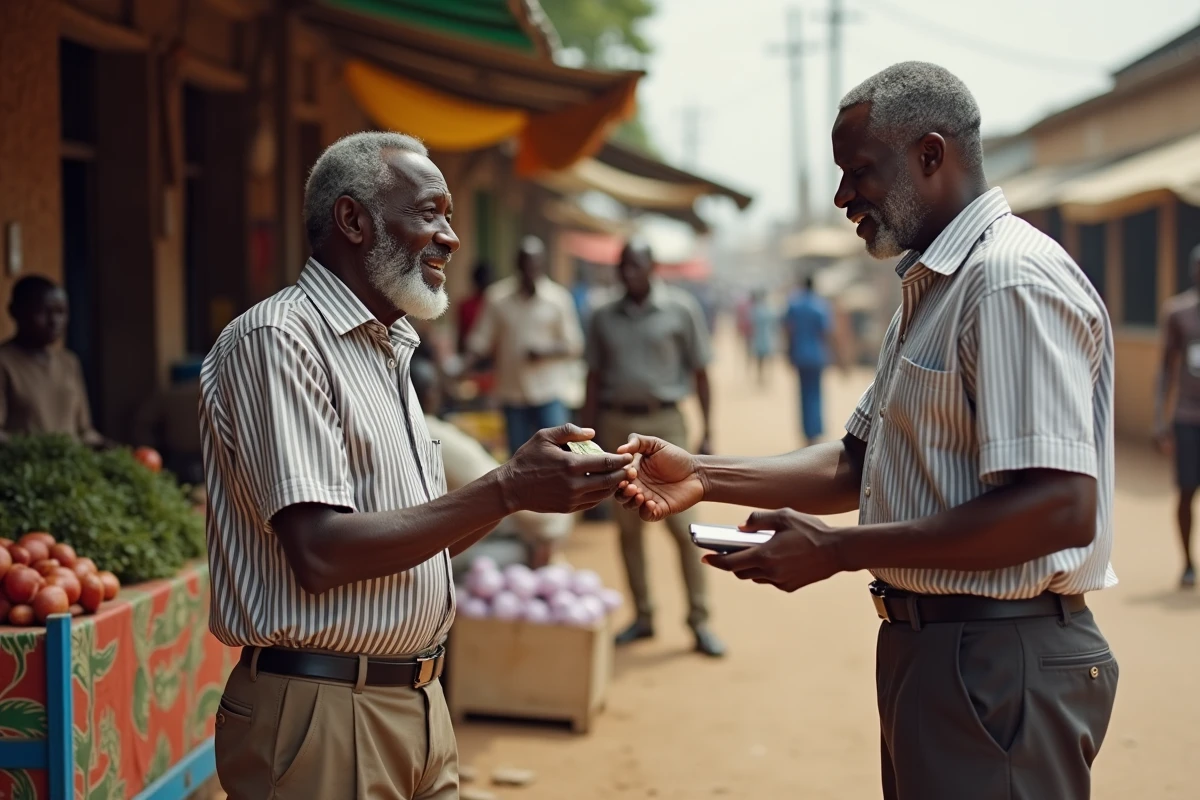
Innovative solutions for simple and accessible money transfers for all
The wave of innovative solutions is concretely changing the way money transfers are made across the continent. Today, the mobile application has become the reference tool, driven by the massive spread of mobile phones and the desire to act quickly, wherever one is. With just a few taps on their smartphone, it becomes possible to send or receive money, without encountering the burdens of old banking networks.
This movement is no longer limited to just the big cities. Mobile money services are reaching even isolated villages, where needs are sometimes the most urgent: paying for a medical consultation, buying cooking supplies, supporting a relative from afar. The simplicity of the offerings and the speed of execution break down the barriers imposed by distance or the absence of local branches.
These services stand out for several major advantages:
- Accessibility 7 days a week, 24 hours a day
- Transparent pricing
- Dedicated assistance, adapted to linguistic diversity
If mobile money is appealing, it is also because it fits into daily life. Sending money now takes just minutes, via an application designed for everyone, without the need for technical training. Trust is growing, fueled by the speed and reliability of the service. Long excluded from traditional financial circuits, Africa is carving its own path, shaking up habits and imposing its models against the backdrop of Western standards.
The African financial landscape is no longer content to wait for change: it is inventing it every day, in the light of innovations that connect, reassure, and transform the lives of millions of users.