One hundred and fourteen years of existence, millions of kilometers covered, and not a single wrinkle on the tread: Kleber, this name evokes much more than a tire brand, it is a story of industry, innovation, and attachment to French soil. Since its beginnings, the brand has carved out a unique place for itself, balancing loyalty to its roots with openness to the continent.
Kleber, a French brand with a unique journey
Looking back at Kleber’s past is to dive into one of the great industrial sagas of France. Founded in 1910 in Colombes, near Paris, the company quickly relied on the American experience of Benjamin Franklin Goodrich, a pioneer of rubber. But it does not simply copy; it adapts, it invents, all while asserting a distinctly French signature. Over the decades, the brand evolves, withstands the shocks of history, and reinvents itself amid the automotive explosion of the 20th century.
After 1945, the company experienced a true acceleration. The workshops in Colombes became one of the engines of tire innovation in France. This dynamic attracted Michelin, which eventually integrated Kleber into its fold at the very end of the last century. From then on, it benefited from the industrial power and technological resources of the tire giant while continuing to cultivate its specificities.
Kleber then broadened its horizons: it caters to both passenger vehicles and agricultural machines as well as utility vehicles. Its distribution extends across Europe, while its manufacturing remains marked by a demand for precision and adaptability. The French factories, particularly in Amiens, remain pillars of this expertise, ensuring controlled, traceable production that stays true to its original spirit. For those who wish to understand the origin and manufacturing location of Kleber tires, this journey tells both of local roots and the brand’s ability to evolve. Enthusiasts, professionals, or simple curious individuals find the common thread of a continuously renewed industrial adventure.
Where are Kleber tires made? A look at the production sites
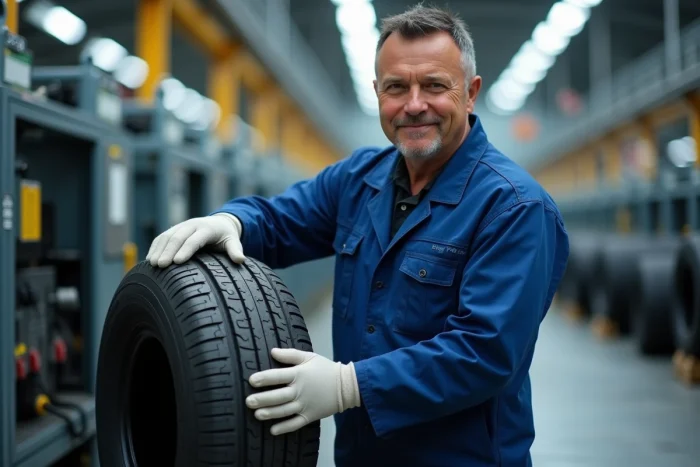
If we map out Kleber’s production today, France still plays a central role. Several industrial sites, led by the one in Troyes in the Aube, ensure the assembly and finishing of the main ranges: from the Dynaxer UHP to the winter models Krisalp. This local presence allows the brand to stay close to the European market while maintaining manufacturing that meets the continent’s standards.
In Troyes, the focus is on the production of passenger tires and agricultural tires. The raw materials, including rubber, technical textiles, and quality steels, are selected to ensure performance and safety. The manufacturing follows a process marked by controls, each step aimed at optimizing rolling resistance and road holding.
For example, here is what structures the activity at the Troyes site:
- Troyes Factory: reference site for passenger and agricultural tires
- Advanced automation and continuous quality control
- Integration of technologies suitable for all-season and winter tires
Traceability is enforced at every link in the chain: from the initial mix to the final test, nothing is left to chance. Since Kleber has come closer to Michelin, the emphasis on robustness and reliability has been further strengthened. On the lines in Troyes, each tire validates this commitment: for everyday cars as well as for agricultural machines, the requirement remains the same.

What users think: feedback and reviews on Kleber tires
Discussions on specialized forums and in groups of motorists often revolve around the reputation and performance of Kleber tires. Those who drive in the city or on the road first commend a quality-price ratio deemed balanced, often cited in the choice of tires for daily use.
What stands out most frequently: the road holding inspires confidence, even in the rain or on slippery surfaces. Users particularly praise the winter range Krisalp, appreciated for its grip on wet or snowy roads. Many mention a sense of safety, without compromising on tire longevity. And for those who monitor consumption, the low rolling resistance is a significant argument.
Here are the points that most often appear in user reviews:
- Stability, whether the road is dry or wet
- Regular wear, mileage considered satisfactory
- Balanced performance in all seasons, according to shared feedback
On the agricultural tire side, feedback highlights a durability appreciated on demanding terrains. Comfort, low noise, and versatility are also emphasized in recent testimonials. Some would have liked more choices for sporty profiles, but the manufacturing, perceived as serious and reliable, remains a strong point. The brand image, inherited from French expertise and backed by Michelin, continues to inspire confidence, whether in the city or the countryside.
In the end, Kleber is paving its way: between industrial heritage, innovation, and user feedback, the brand remains glued to the European asphalt, ready to tackle the turns of tomorrow.