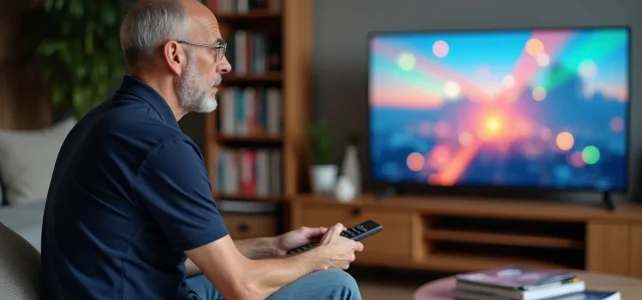
Don’t look for simple logic: the amount of daily advertising on TF1 is not just a matter of numbers or regulations. It’s a shifting equation, the result of sharp commercial strategies and standards that are sometimes circumvented at the edge of the possible. In France, regulations limit the daily duration of television advertising to an average of 9 minutes per hour on private channels. However, some viewers notice much more frequent breaks, especially when watching movies or series on TF1 in replay.
How much advertising time each day on TF1? Key figures to know
To measure reality, figures from the daily advertising time on TF1 provide a precise overview of the phenomenon. The Conseil supérieur de l’audiovisuel (CSA) imposes a very clear rule: on average, over an entire day, no private channel can broadcast more than 9 minutes of advertising per hour. This includes all time slots, without excluding popular evening shows or morning programs.
Related reading : The latest statistics on people living to 90 in France
In practice, the management of advertisements takes on a different face. TF1 optimizes its strategy by concentrating advertising breaks during peak viewing times, particularly during prime time. It is not uncommon for the broadcast to rise to 12 minutes of advertising in an hour, before falling below the limit during other off-peak slots. The regulatory average is preserved, but the viewer experience is affected, especially when all interruptions are accumulated over a day.
On a typical week, the total number of spots regularly exceeds two hours of advertising per day. This fine management, sometimes on the edge of zapping, creates a real pressure felt in front of the screen and stirs the debate about the place of advertising in private service television.
Further reading : Why Adopt the New Brikstok Platform: All the Benefits to Know
Why does TF1 broadcast so many advertisements, including in replay?
Far from obeying a simple routine, the abundance of advertisements on TF1 primarily responds to a straightforward economic logic. Deprived of public subsidies, the channel survives solely through the sale of advertising space. With the evolution of usage, the decline of live broadcasts, and the rise of digital platforms, TF1 adjusts its revenue to capture every possible audience.
The replay broadcast embodies this adaptation. Here, each delayed viewing becomes an additional opportunity to offer tailored breaks. On the app, on the website, or via the connected television, the advertising screens are no longer exactly the same as those during live broadcasts: they adjust, repeat, and sometimes even multiply, simply because each broadcast represents potential revenue.
Producing a show is expensive, and obtaining rights is costly too. Advertising ensures this fragile balance. Thus, the entire economic architecture of the group depends on the ability to monetize every minute of attention. Consequently, on TF1 and its platforms, viewers face a sequence of interruptions that, from one medium to another, feed the impression of an omnipresent advertising environment. This feeling weighs on the viewing experience and crystallizes tensions.

The impact of advertising breaks on the viewing experience of films and series
A movie or series on TF1 is no longer watched in one go. That’s the price to pay: the narrative regularly suffers interruptions, interrupted by a series of ads. The Conseil supérieur de l’audiovisuel regulates, of course, the breaks: no more than two interruptions for a feature film, spaced at least twenty minutes apart. However, this does not prevent the impression of a fragmented story. The tension drops, the emotion dissipates, the magic of the narrative falters.
Fiction gives way to frustration. Movies see their rhythm disrupted by breaks. Series, naturally segmented, cope better, but the intensity dulls. The audience feels it: each break erodes concentration, fragments enjoyment, undermines investment in the plot.
On DTT as well as in replay, it is impossible to ignore the interruptions. The free nature of television hides this trade-off: funding requires concessions. Personalities like Isabelle Morini Bosc remind us: respecting creation also means considering the viewer’s experience, not just the budgetary imperatives of private groups.
In concrete terms, these breaks impose three major consequences for the viewer:
- Interrupted narrative: understanding and immersion take a hit
- Advertising time: peaks during prime time sometimes reach 12 minutes of ads in one hour
- View on advertising: the feeling of television becoming more of a commodity than a service
The audiovisual landscape reshapes every evening, as interruptions pile up and the desire for a break grows, not just the one dictated by advertising. The compromise remains fluid: it’s up to each person to choose between tolerating the wait or opting for other screens. And tomorrow, viewers’ choices will likely determine the course of this grand commercial saga that is private television.