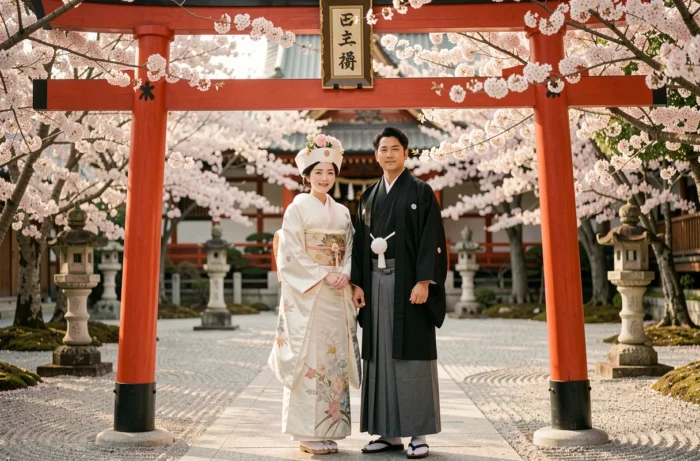
Traditional weddings are not just a list of picturesque rites categorized by country. Behind each custom lies a social, economic, and sometimes legal logic that structures the ceremony well beyond its festive appearance. Organizing a traditional wedding involves navigating between ancient cultural heritages and contemporary constraints, whether they be local regulations, costs, or family negotiations.
Destination Weddings and Local Heritage: When Custom Becomes an Economic Lever
Destination weddings are no longer limited to couples dreaming of an exotic beach. They have now become a tourism and economic lever for entire regions. In Puglia, professionals describe multi-day events combining ceremony, gastronomy, music, art, and regional traditions. These celebrations include accommodation, catering, tours, and the discovery of local heritage.
Scotland offers a telling case. According to the BBC, nearly a quarter of the weddings registered in Scotland in 2025 involved couples where neither partner resided in the country. Some explicitly choose rituals like celtic handfasting and historic venues for their heritage dimension, not just for their aesthetics.
This phenomenon has direct consequences for organization: local providers (caterers, artisans, musicians) become the guarantors of the ceremony’s authenticity. Couples wishing to explore these traditions and the professionals who accompany them can find information from the Mariages du Monde website covering a wide range of customs and wedding destinations.
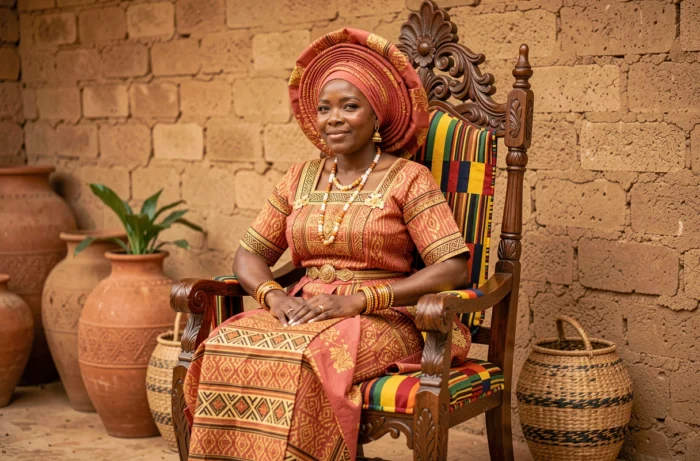
Multi-Day Celebrations: A Format That Transcends Cultural Boundaries
Hindu weddings often span three to five days. Jewish traditions include rituals spread over several key moments. These formats, long perceived as specific to certain cultures, are becoming generalized in a hybrid form: the Western wedding weekend.
On the other hand, the adaptation of these practices to a Western framework remains insufficiently documented. Field reports vary on this point: some organizers report that Western families willingly adopt the multi-day format, while others observe resistance related to budget or guest availability.
What distinguishes a multi-day traditional wedding from a simple festive weekend is the ritual structuring of each stage. Each day has a specific function:
- Preparatory rituals (henna in Morocco, mehndi in Hindu weddings) mark the transition from singlehood to union and gather the extended family.
- The actual ceremony follows a codified protocol, often religious or customary, which engages both families before the community.
- The post-ceremony festivities (dances, meals, symbolic games like Baumstamm Sägen in Germany) strengthen the bonds between the two families and their guests.
This structuring is not decorative. It serves a social function that a half-day ceremony cannot replicate.
Wedding Customs and Legal Framework: What Tradition Doesn’t Always Say
Organizing a traditional wedding in a foreign country, or importing a custom into a different legal framework, raises concrete questions that travel guides often overlook. A religious or customary wedding does not automatically have legal value in the country where it takes place, nor in the couple’s country of origin.
In Morocco, the traditional wedding takes place over several days with specific rituals (henna, multiple outfits, musicians), but it is the adoulaire act that grants it legal validity. In Greece, the Orthodox wedding has civil value, which is not the case in most European countries. The legal validity of a traditional ceremony varies by country, and couples who are unaware of this risk finding themselves symbolically married without legal recognition.
The available data do not allow for a complete overview of all scenarios. Couples considering a traditional wedding abroad should consult the consulate of the relevant country before planning the ceremony.
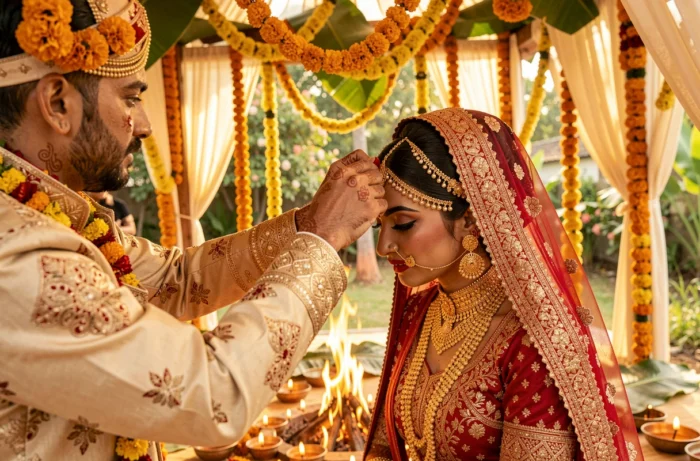
Relocalization of Traditional Weddings: Local Artisans and Authenticity
A recent trend is to relocalize destination weddings to less expected national regions. Rather than going abroad, some couples choose a region of their own country where culinary, artisanal, or musical traditions strongly color the ceremony.
Professionals report an increased reliance on local artisans and suppliers to ensure the authenticity of the celebrations. A wedding in Provence that incorporates Provençal traditions (thirteen desserts, farandole) does not need imported decor to create a coherent cultural experience.
This trend raises the question of what constitutes the authenticity of a wedding custom:
- The geographical origin of the ritual, even if the couple has no family ties there.
- The participation of artisans or musicians who are custodians of the tradition, regardless of the ceremony’s location.
- The couple’s intention, which may choose a ritual out of cultural conviction, family heritage, or aesthetic appeal.
None of these answers is definitive, and field reports show that families and cultural communities do not all share the same understanding of what constitutes an “authentic” wedding.
Organizing a traditional wedding, whether it takes place in its country of origin or thousands of miles away, remains a balancing act between respecting customs, logistical constraints, and legal realities. Couples who take the time to understand the social function of each ritual, rather than reproducing it as a mere decorative element, are the ones who make the most of these traditions that have sometimes been passed down for centuries.