
Gamm Vert, with its hundreds of retail outlets spread across the French territory, is part of the daily landscape for amateur gardeners and rural residents. When a brand so deeply rooted locally changes hands, the question naturally arises: who is now steering the network, and why this change?
Gamm Vert and the agricultural cooperative model: a story linked to InVivo
Before discussing the acquisition, it is essential to understand where Gamm Vert comes from. The brand was created in 1977. It did not emerge from a traditional distribution group, but from the cooperative agricultural world.
See also : Discover the new address of 1jour1film and the upcoming changes in 2026
Specifically, it was local agricultural cooperatives that developed stores to sell seeds, tools, and gardening products to the general public. These cooperatives then federated within a national structure: Union InVivo, the largest union of French agricultural cooperatives.
InVivo operates in several areas: agriculture, animal nutrition, wine, and retail distribution. In the latter aspect, the group notably manages the brands Gamm Vert and Delbard. For a long time, the majority of the Gamm Vert network developed through franchising, with each local cooperative managing its own stores under the common banner. To better understand the acquisition of the Gamm Vert franchise, it is important to keep in mind this particular architecture where franchised stores and branches coexist.
Related reading : Everything you need to know about the definition of a mixed property and its tax benefits
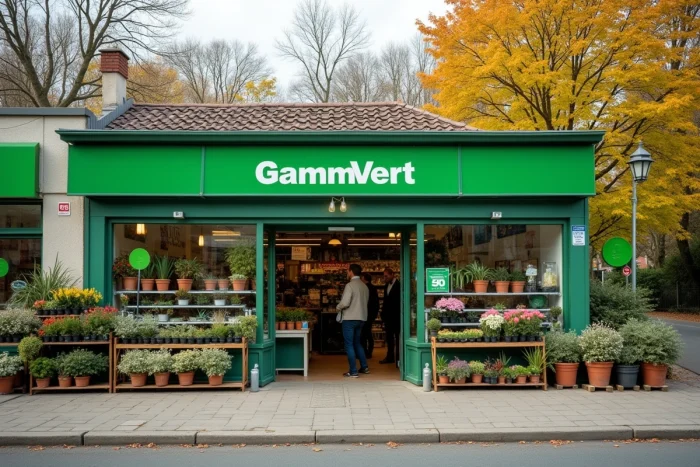
InVivo Retail and TERACT: the acquiring group behind the acquisition of Gamm Vert
Why is there talk of an acquisition if InVivo was already linked to Gamm Vert? Because the group gradually changed the nature of its control over the network.
In 2017, InVivo entered into exclusive negotiations with two cooperatives (Axéréal and Terrena) to acquire around 90 franchised Gamm Vert stores and convert them into branches. The stated goal of management was to rebalance the network between franchising and branching.
Directly owning stores allows the group to test new offers more quickly, standardize the customer experience, and manage the retail outlets without relying on the individual decisions of each franchised cooperative.
From InVivo Retail to TERACT
The public retail branch of InVivo then took the name TERACT. This subsidiary includes several brands, including Gamm Vert, Jardiland (acquired in 2018), and Delbard. TERACT has been publicly listed, which has given distinct financial visibility to the gardening and distribution activities of the cooperative group.
The situation has evolved further recently. In 2026, a notice published via the AMF announced the implementation of a mandatory withdrawal of TERACT shares. This means that the group is withdrawing from the stock market, consolidating InVivo’s control over all its distribution activities.
Acquisition of Jardiland: when Gamm Vert absorbs its direct competitor
The most significant acquisition in this story remains that of Jardiland by InVivo in 2018. Have you noticed that in some cities, a Gamm Vert and a Jardiland coexist just a few kilometers apart? This is not a coincidence: both brands now belong to the same group.
The Competition Authority authorized this operation, but under conditions. It identified areas where the merger created a risk of dominant position. InVivo had to divest 11 stores to ensure sufficient competition in the affected areas.
- The divested stores had to be taken over by competitors capable of maintaining an alternative offer in gardening, pet supplies, and DIY.
- The commitment was for specific local areas, not for a national restructuring of the network.
- In the upstream market (sourcing from suppliers), the Authority did not identify any issues, as the market share of the new entity remained limited on a national scale.
Gamm Vert network today: between branches and local takeovers
The network’s structure remains in motion. While InVivo (via TERACT) directly controls an increasing share of the stores, local cooperatives continue to independently take over Gamm Vert retail outlets.
For example, the Cavac Distribution group has taken over 8 Gamm Vert stores, and the Terres du Sud group has integrated 3 into its scope. These occasional takeovers show that the integration of the network is not a monolithic block managed solely from Paris.
A network with variable geometry
This coexistence between the group’s branches and stores managed by local cooperatives creates a two-speed network:
- The branches benefit from a centralized commercial strategy, with harmonized product ranges and development projects led by TERACT.
- The franchised or locally taken over stores retain some adaptability to their territory, with ranges sometimes oriented towards local agricultural needs.
- The end customer does not always perceive the difference: the brand, logo, and part of the offer remain the same.

What does this acquisition mean for Gamm Vert customers
The gradual shift from a franchised model to a more integrated model has concrete consequences. The in-store offer tends to standardize, with more visible national ranges and coordinated promotional activities.
The quality of advice may vary depending on whether the store is managed by a local cooperative, familiar with the agricultural specifics of its region, or by a branch applying a group strategy. For an amateur gardener, the difference mainly lies in the depth of the range of local products and technical advice.
The acquisition of Gamm Vert is not a unique and dated event, but a process spread over several years, led by InVivo and then its subsidiary TERACT. The true acquirer remains the French agricultural cooperative world, structured around InVivo, which has chosen to centralize and professionalize the management of a historically fragmented network. TERACT’s withdrawal from the stock market in 2026 confirms this desire to regain total control, far from the demands of financial markets.